
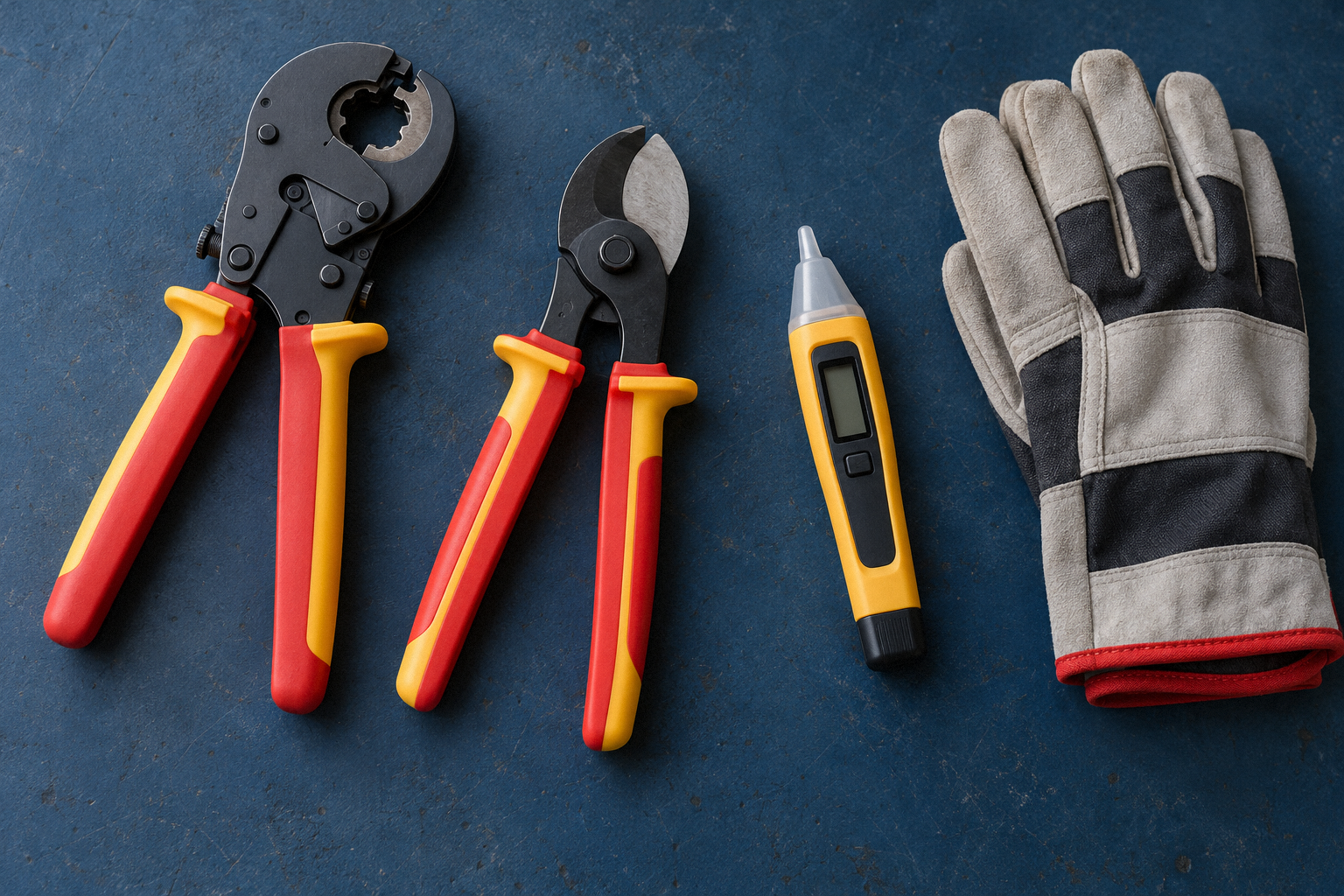
Substation work calls for different equipment depending on the task, the installation and its electrical hazards. A voltage detector, a cable tool and a protective barrier serve different purposes; the presence of one does not make a work area safe. The examples below describe categories, not a list of equipment suitable for every station.
Voltage detection
Voltage detectors provide an indication of voltage under their specified conditions. Designs and applications differ. For example, the DEHN safety equipment catalogue describes particular detectors for switchgear installations and overhead lines, with visual and audible indications. Their stated applications and characteristics apply to those models, not to every detector. The catalogue also lists a self-testing element for these models. NIMI describes contact and non-contact detectors as different categories; their suitability depends on the device and application. A reading or indication must be interpreted within the site's approved procedures and the manufacturer's instructions.
Cable work equipment
Cable installation and termination can involve cutting and crimping tools, as well as rollers and pulling equipment for cable laying. NIMI lists these as examples of cable jointers' equipment. NIMI also lists cable-laying socks and jacks, and hydraulic, battery-operated and ratchet types of crimping tool. These examples serve different cable-handling or connection tasks. The cable, connection system and work environment determine which equipment is appropriate. This overview does not describe how to prepare, connect or test a cable.
Insulated tools and protective equipment
Insulated tools are one category considered in electrical work. Personal protective equipment is a separate category: NIMI lists items such as insulating gloves, sleeves and eye or face protection in its electrical safety material. Selection depends on the task and the applicable requirements. Insulated tools and protective equipment have different purposes, and their suitability depends on their specifications and the work. Neither category on its own establishes that work can safely begin.
Planning and safe work
Substation hazards include electric shock and burns, accidental contact with live equipment, and induced or retained voltage. Work must be planned and performed by qualified personnel under the station's applicable procedures and the instructions for the actual equipment. NIMI also describes permits to work and equipment-specific operation and maintenance documentation. The authorization and documents for a particular task depend on the station and applicable requirements. Switching off a device or obtaining an indication from a detector alone does not establish a safe work condition. This article is not a procedure for testing, isolation, grounding, energized work or equipment connection.
Sources
See NIMI, Electrician (Power Distribution), 2nd Year Theory, PDF pages 77–78, 161 and 229–230, and the DEHN Safety Equipment Catalogue, October 2023, PDF page 37. Refer to the current documentation for the particular equipment and installation.