
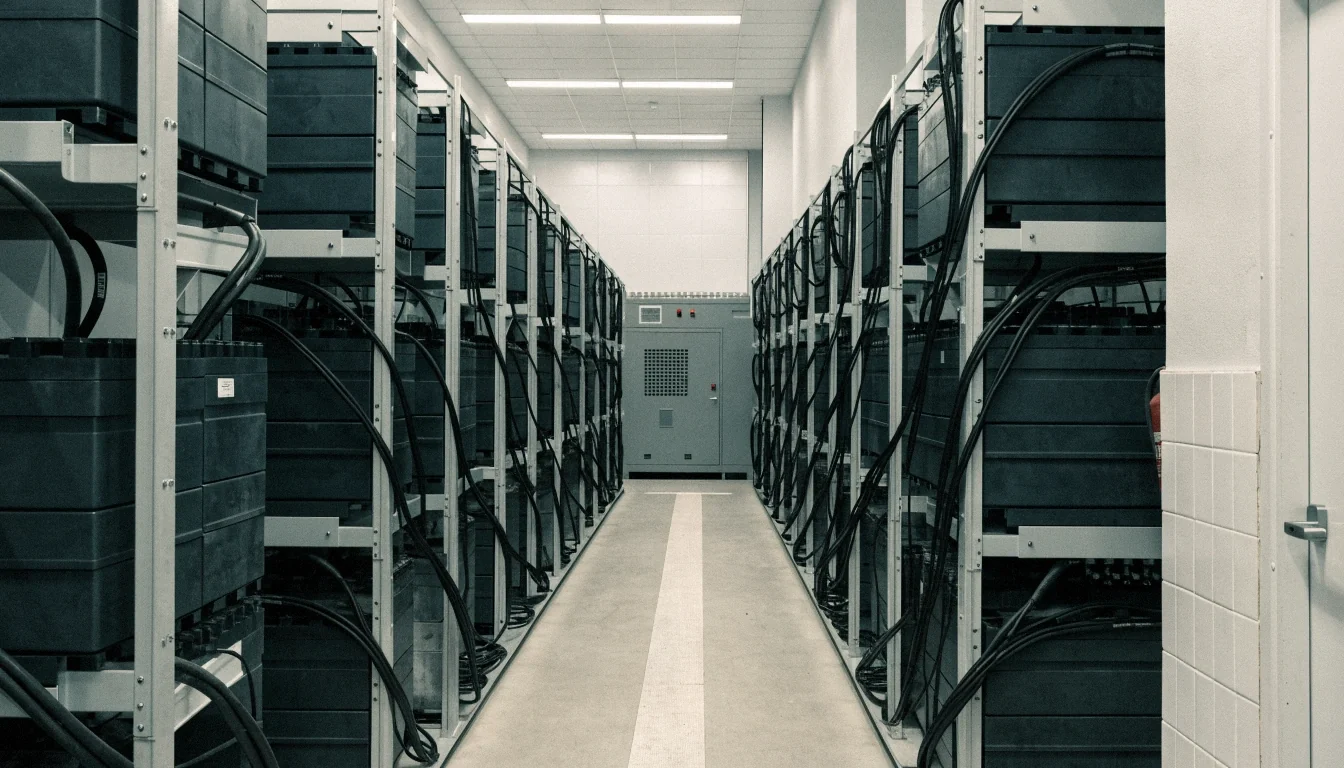
Why a DC supply is used
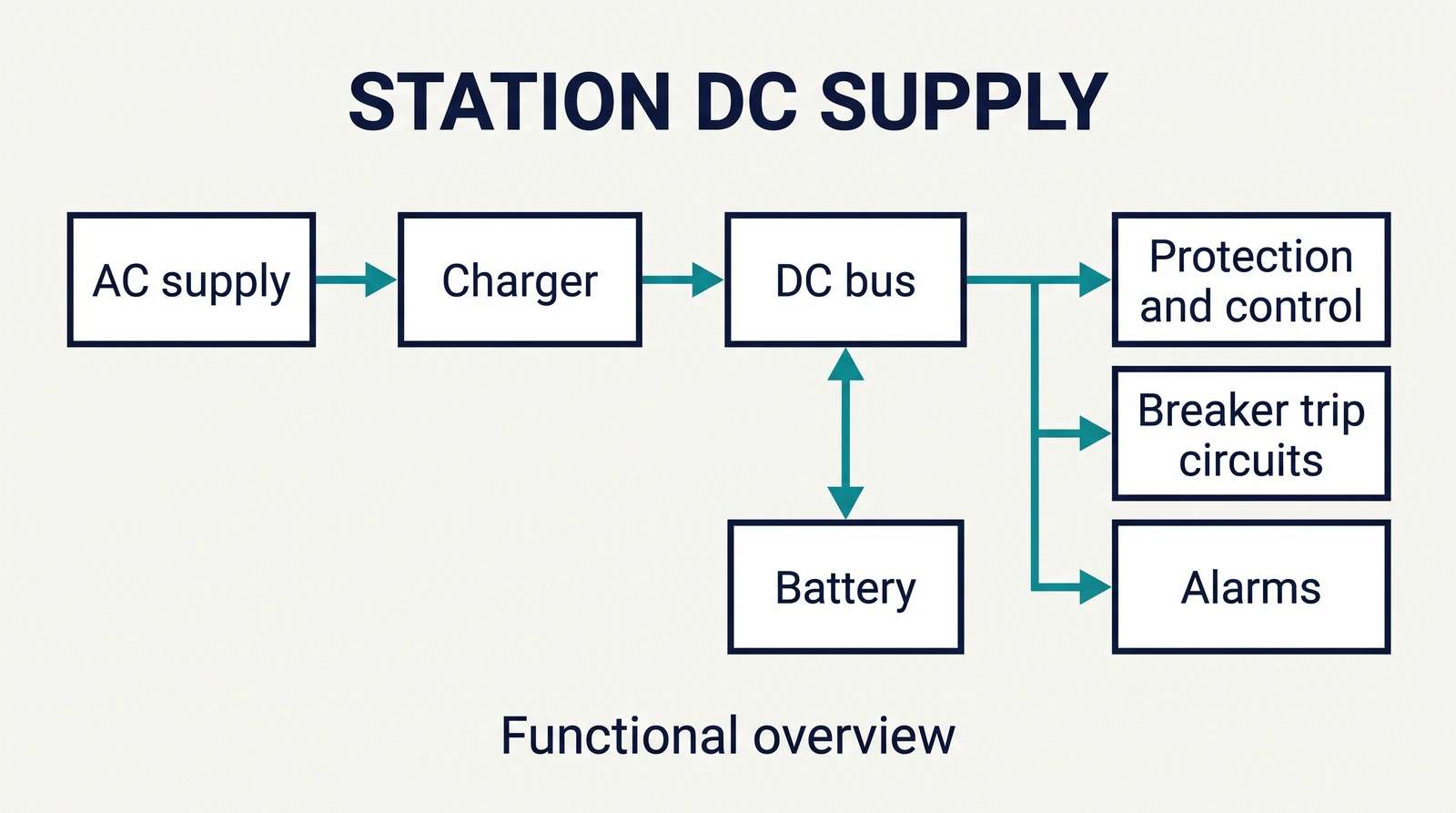
A station DC system supports control and protection equipment that must remain available when the normal AC supply is interrupted. A battery and charging equipment are common parts of the system.
Battery, charger and distribution
The charger supplies the DC system and maintains the battery in normal service; the battery provides stored energy when needed. DC distribution equipment separates and protects outgoing circuits according to the design.
Operational considerations
Monitoring the health of the supply and its distribution is part of maintaining system availability. An alarm or loss of a supply requires investigation under the station’s approved procedures; individual alarm channels and circuit arrangements differ.
Normal and interrupted supply
During normal service the station charger and battery form part of the DC supply arrangement. If the normal AC source to the charger is lost, stored battery energy may support connected DC loads for a period determined by the actual system design and battery condition.
Loads and distribution
Control, protection and other station functions can depend on DC. Distribution equipment connects outgoing circuits to the DC source; the arrangement and protective devices are specific to the facility. A supply failure can affect more than one function, so an alarm should be interpreted in system context.
What documentation should show
A station’s one-line and control documentation identifies sources, distribution circuits, monitoring points and the intended response to alarms. Individual alarm channels must be interpreted using the station documentation.
Loss of supply versus loss of protection
A station can have separate monitoring for charger, battery and distribution conditions. A supply alarm points to a condition that requires investigation, but it does not on its own identify every affected load. The meaning of an alarm and the remaining available supply depend on the station arrangement.
A supply interruption example
In the SENS IQ manual’s example, the system load continues on the battery after AC input is lost. When AC returns, the charger supplies current again and the battery charging state changes over time. This is one equipment example; it does not establish the autonomy or switching behavior of every station.
Alarms and system limits
A station’s monitoring can distinguish conditions such as loss of charger input or abnormal DC voltage. The SENS documentation gives examples of display and alarm functions; the actual signals and response depend on the installed equipment. Battery capacity and load determine how long a DC system can support its connected functions during a loss of supply.
Further reading
SENS IQ Technical Manual, example charging sequence