
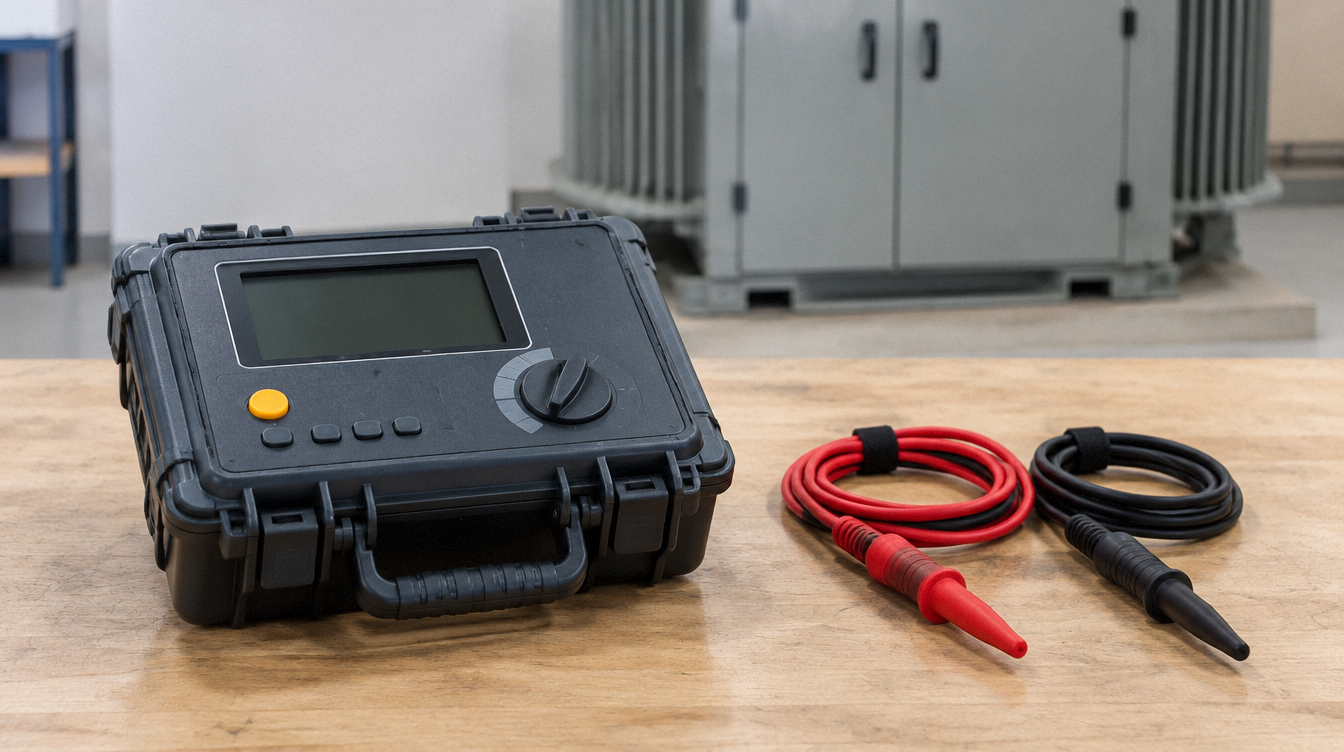
What is measured
An insulation resistance test is used to assess the condition of a transformer insulation system. It is one part of a broader assessment, rather than a complete diagnosis of the transformer.
Interpreting a result
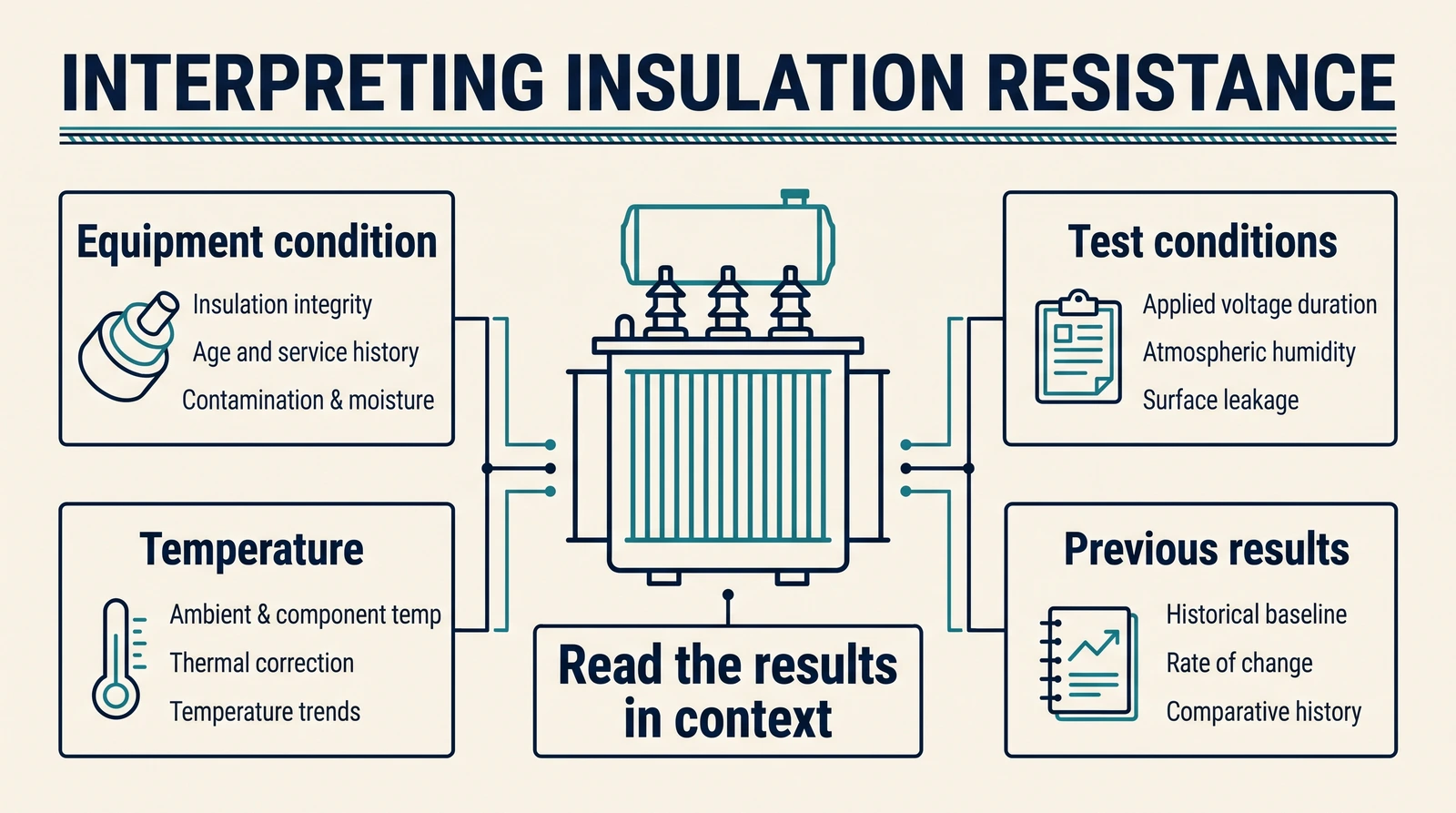
A reading must be interpreted in the context of the equipment and its condition. The training text notes that temperature affects insulation readings; test history and the applicable manufacturer instructions also matter.
Limits of this overview
Testing can expose personnel and equipment to electrical hazards. The connection, test voltage, duration, acceptance criteria and post-test handling are equipment-specific and must be determined by qualified personnel using the relevant procedures.
Insulation system and measurement
A transformer has insulation between its windings and between windings and earth. A resistance measurement considers leakage through or over an insulation system. The numerical result alone does not identify the precise location or cause of a problem.
Why comparisons need context
The training text notes that temperature affects insulation resistance and that comparison with previous readings requires consideration of temperature. Moisture, contamination and the test arrangement can also influence a reading. A historical result is most useful when the test conditions are documented consistently.
What a single value cannot tell you
A change from a prior record may justify investigation, but neither a universal pass threshold nor a correction factor can be assigned safely from this overview. The complete assessment can include other tests and inspection, selected for the particular equipment by qualified personnel.
Different tests answer different questions
Insulation resistance and a dielectric withstand test are not the same measurement. The training text treats insulation assessment and applied-voltage withstand testing separately. Results from one method should not be presented as a substitute for the other, and the test program must fit the condition and design of the transformer.
Further reading
Bharat Skills Electrician (Power Distribution), revised 2022, pp. 115–118 and 163–166.