

The charger’s role
A station charger converts AC supply to DC for the station system and battery. The exact architecture and operating modes depend on the charger and the connected battery.
Functional building blocks
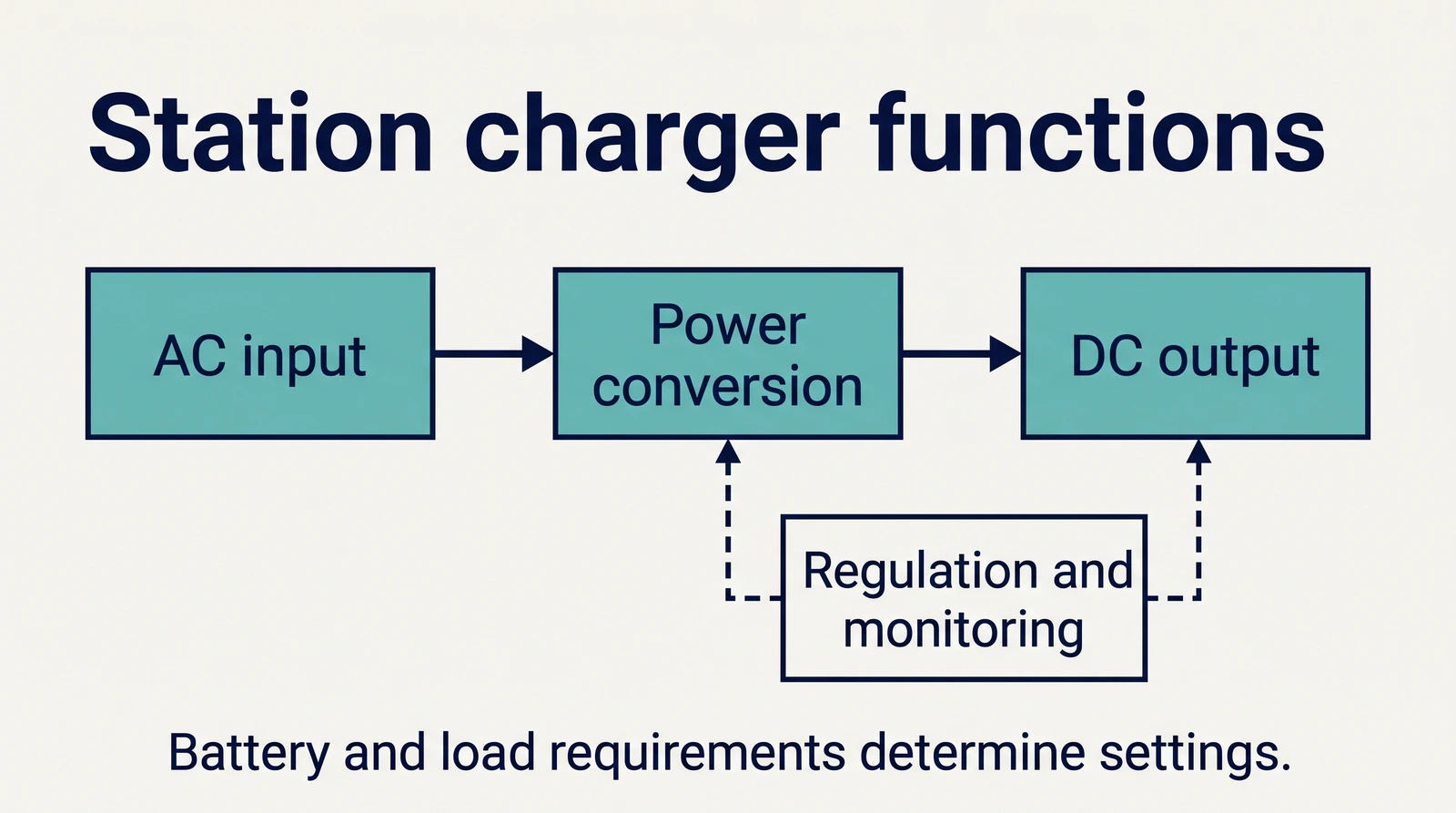
A charger may contain an input section, power conversion, output regulation, protection and monitoring. These are functional descriptions, not a claim that all chargers use the same circuit or component arrangement.
Protection and documentation
Protection and alarms help identify abnormal conditions, but their functions and settings vary with the design. Consult the manufacturer’s manual and approved station procedures for a specific unit. This overview does not provide a connection diagram or repair procedure.
Conversion and regulation
A charger takes an AC input and produces a DC output. Its regulator controls the output according to the unit’s design and the needs of the connected system. Converter technology and the way a particular charger regulates voltage or current vary by manufacturer.
Battery and load
In a station DC arrangement, charging equipment, the battery and the connected loads must be considered together. A battery may supply the system when the charger’s normal input is unavailable; the duration and behavior depend on the installed system.
Monitoring and protection
Monitoring can report an abnormal supply or equipment condition, while protective functions act according to the manufacturer’s design. Charger components and their interconnections vary by design; use the equipment documentation to understand the particular unit.
One source, many implementations
The functional blocks above describe roles, not a model-specific parts list. For example, one design’s control module, measurement arrangement or alarm interface should not be assumed to appear in every other charger. A manufacturer drawing is necessary to understand the actual unit and its interconnections.
Float and equalize modes
Some chargers offer a float mode to maintain a charged battery and an equalize mode for specified battery service. The SENS IQ manual describes both modes and emphasizes following the battery manufacturer’s recommendations. Not every battery or application should be assumed to use equalization.
Charging alongside a DC load
The SENS IQ example shows a station load supplied from the battery after loss of the AC input and the charger resuming after power returns. Charger current may include both the continuing load and battery charging current; interpreting an automatic mode therefore requires the equipment’s instructions and knowledge of the actual load.
Alarms and independent protection
The SENS charging FAQ distinguishes normal charger regulation from alarm and shutdown functions. These functions can alert operators or stop a malfunctioning charger, but their presence and arrangement depend on the model. Excessive charging can damage batteries and create hazardous gas; settings and maintenance belong to qualified personnel using the installed equipment documentation.
Further reading
SENS IQ Technical Manual, example charging sequence