
Purpose
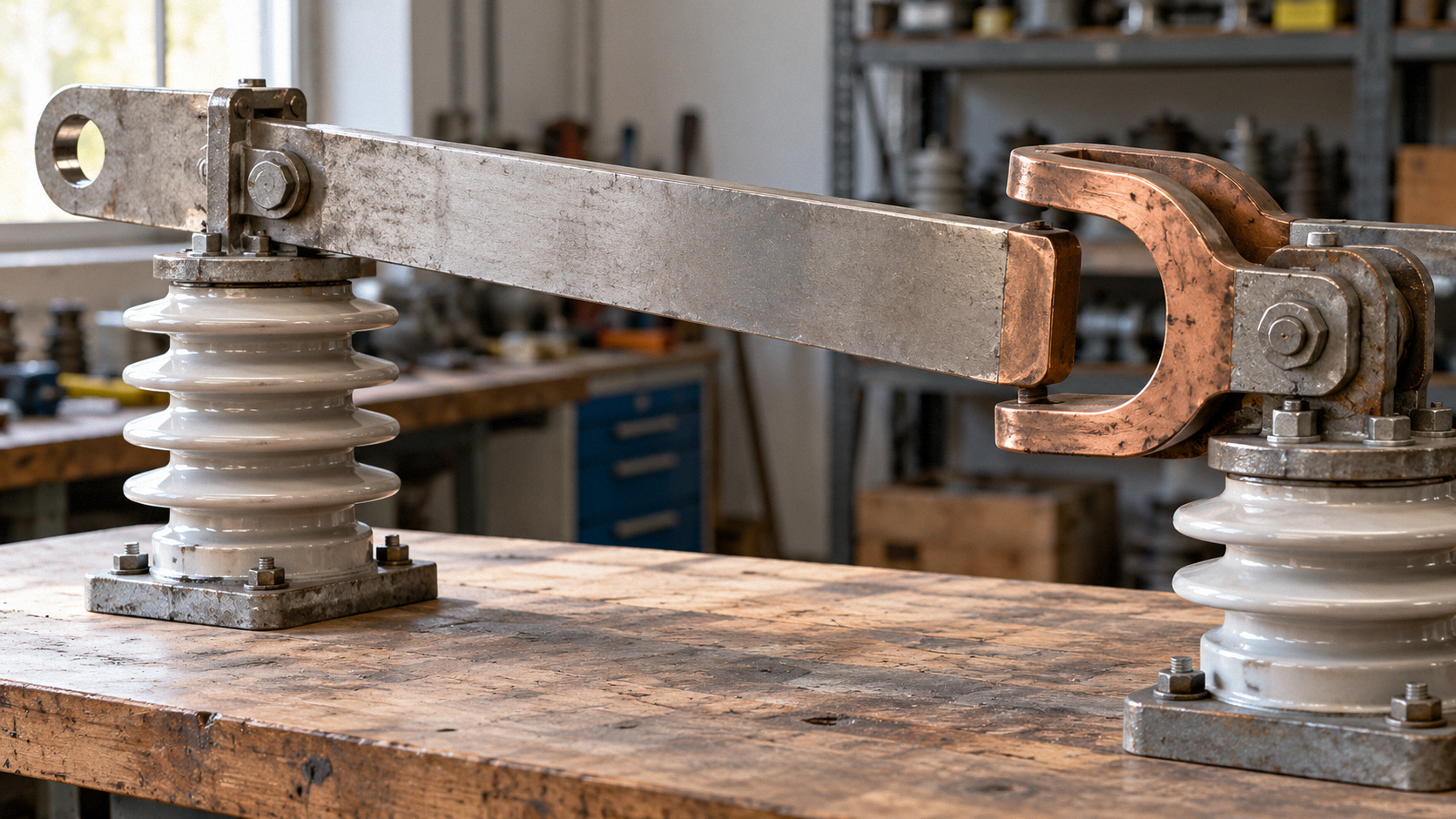
An isolator, also called a disconnector, separates a circuit from a supply. It is part of an isolation arrangement; the presence of a device alone does not establish a safe work condition.
Isolator and circuit breaker
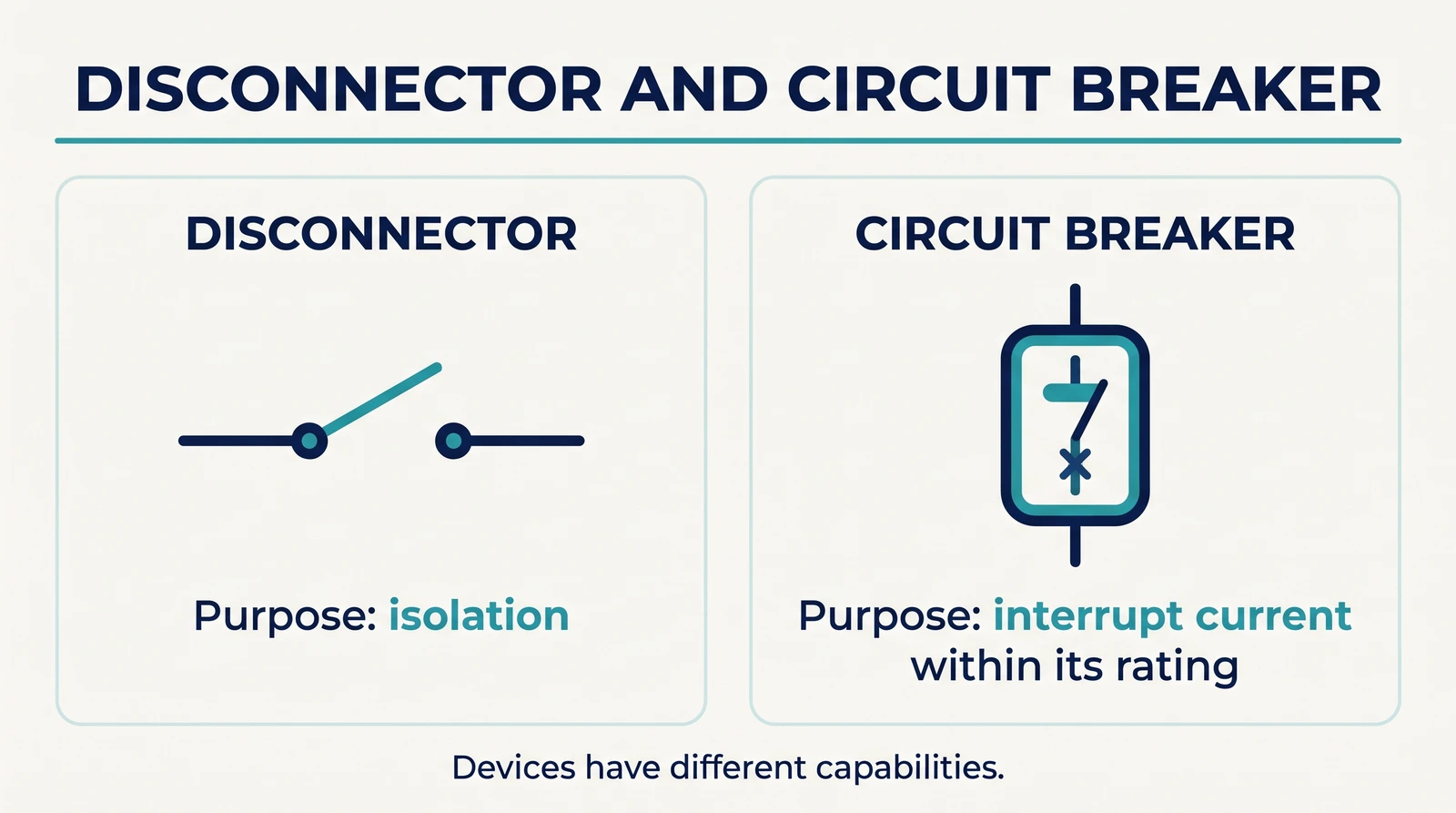
The training text describes isolators as normally operated off load. A circuit breaker has a different protective switching role. The exact capabilities and permissible operations depend on the equipment and its instructions.
Components and arrangements
An installation can include fixed and moving contacts, an operating mechanism and associated interlocks or earthing equipment. Designs vary, so drawings and device instructions are needed to identify the actual components and sequence.
Role within switchgear
A circuit breaker is intended to interrupt current within its specified capabilities; an isolator provides a disconnecting function. Their roles are coordinated in an installation, but the two devices should not be assumed interchangeable.
What the description does not establish
“Off load” describes the normal operation of the device in the training text. It does not mean that moving a handle proves every conductor is de-energized, or that a device is suitable for switching any particular current. Equipment ratings, interlocks and station procedures govern the actual installation.
Equipment-specific arrangements
The operating mechanism may be local or remotely controlled, and some assemblies include an associated earthing switch. The arrangement and interlocking must be identified from the installation’s own drawings. This is a conceptual guide, not a switching sequence.
Isolation and work authorization
The disconnector is only one element in a wider system of isolation. An indication of switch position should be interpreted within the equipment’s documented interlocks, test provisions and local safety process. An overview cannot establish that a circuit is safe for a person to touch or authorize a switching operation.
Further reading
Bharat Skills Electrician (Power Distribution), revised 2022, pp. 3 and 48.