
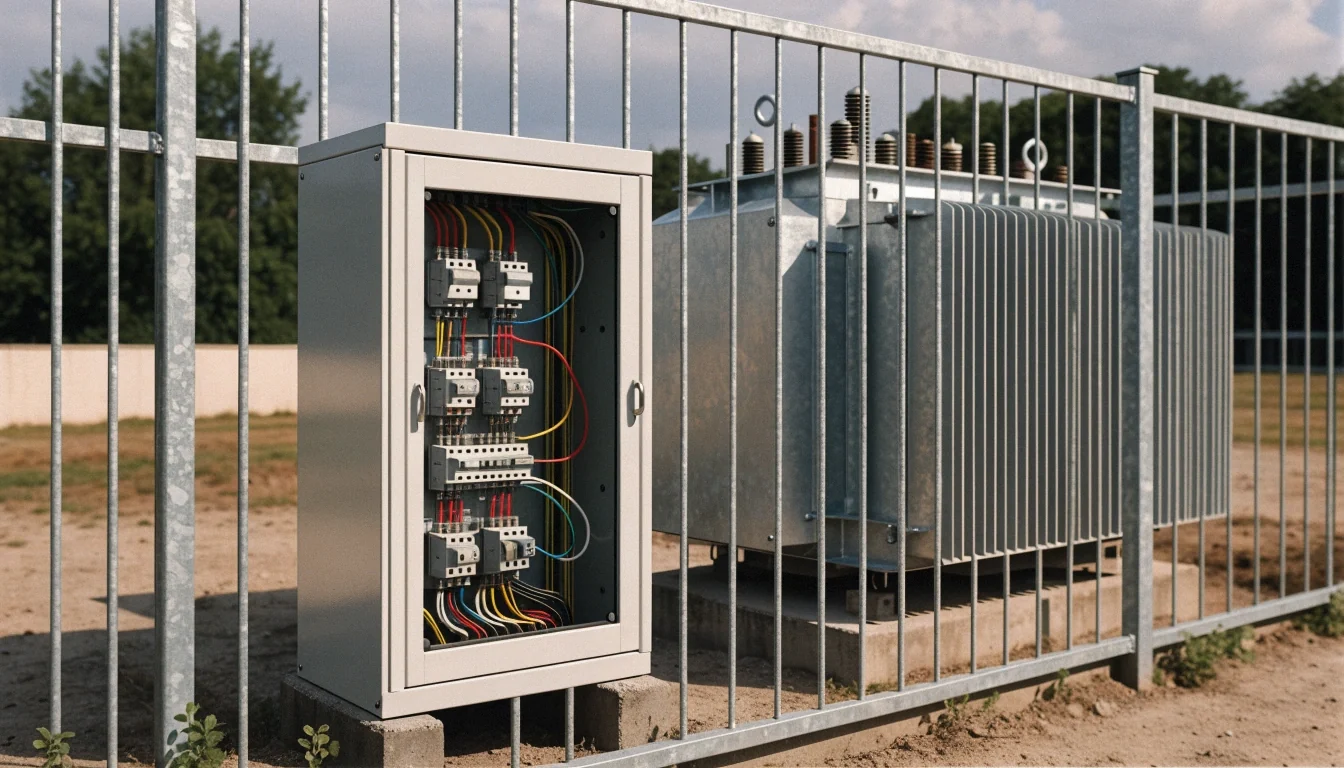
There are different kinds of transformers such as distribution transformers, power transformers, autotransformers, regulating transformers, isolation transformers, and rectifier transformers, etc.
The transformer protection scheme varies based on the type of transformer. Transformer protection depends upon their importance, winding connections, earthing methods and mode of operation etc.
A transformer has its marshaling kiosk in the yard and a protection panel in the control room.
Need of Protection
- The continuity of transformer operation is very important to maintain the reliability of a power network.
- Any unscheduled repair work, especially the replacement of a faulty transformer is very expensive and time-consuming.
- Major damage following a fault may require extensive repair.
TYPES OF FAULT IN TRANSFORMERS
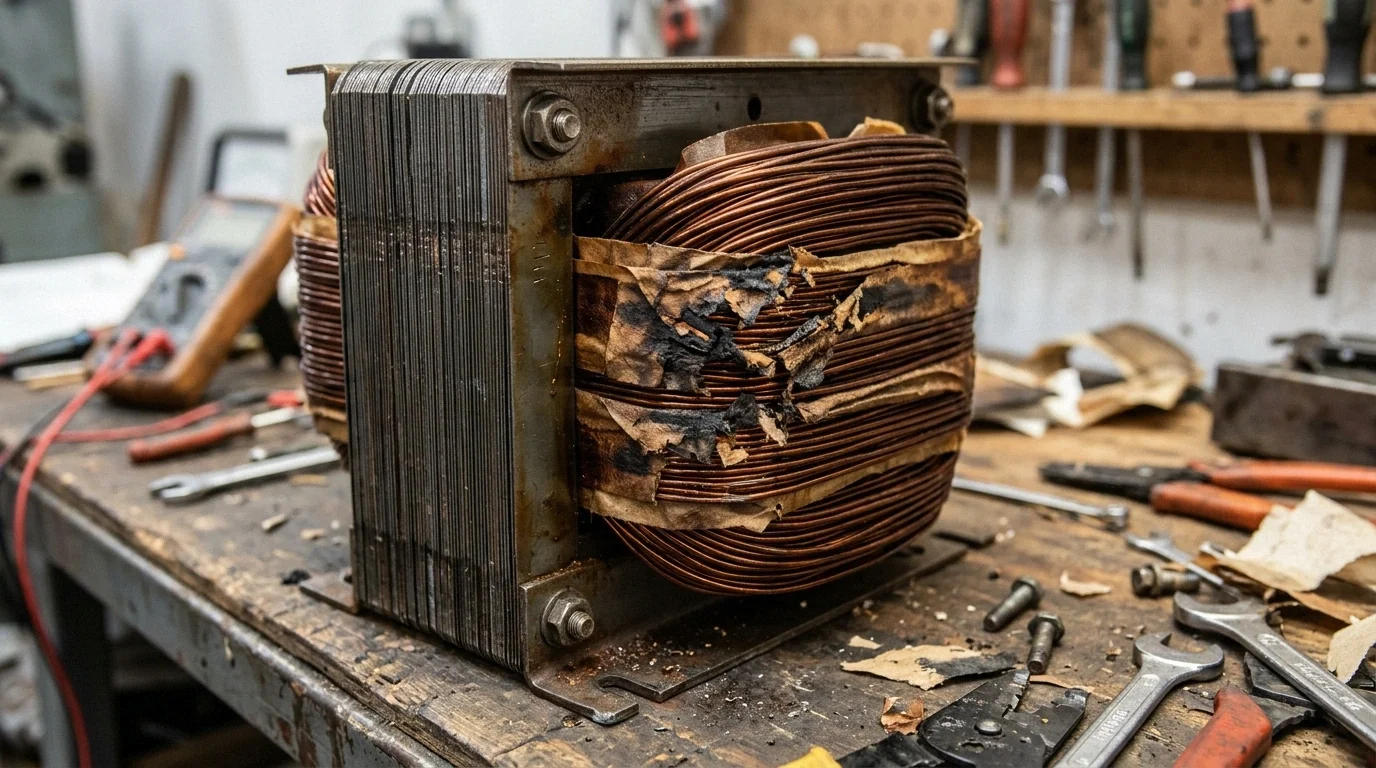
EXTERNAL FAULT
- In case of an external fault condition, the transformer must be disconnected if other protective devices intended to operate for such faults, fail to operate in a predetermined time.
- Time graded over current relays is used as backup protection.
- Thermal protection can respond to transformer overload, depending on the equipment and protection scheme.
INTERNAL FAULT
Short circuit in the transformer winding & connections —
- Cause immediate damage
- Detectable at winding by unbalance in voltage or current.
- Include line-gnd, line-line fault
Incipient faults –
- Minor in nature but slowly develop into major faults.
- Due to poor electrical connections, core faults, failure of the coolant, regulator fault & bad load sharing between transformers.
| SL NO | PROTECTION SCHEME | PRINCIPLE | PROTECTION ZONE |
|---|---|---|---|
| 1 | DIFFERENTIAL(87T) | Works on the principle of current differential and operation depend on the difference and restraint of current | Transformer winding |
| 2 | OVER CURRENT(51,67) | It acts on the principle of over-current in the system and behaves as backup protection. | Transformer winding |
| 3 | EARTH FAULT | It acts on the principle of residual current, an unbalanced current in the system. For the earth fault in the winding, the differential /REF relay actuates,if fails then this relay operates as the backup. | Transformer winding |
| 4 | RESTRICTED EARTH FAULT | This relay is connected across the residual current in the system and neutral current with the necessary arrangement of stabilizing resistor and other auxiliaries | Transformer Winding & Insulation |
| 5 | OVER FLUXING | Over fluxing conditions in a transformer can occur during system over-voltage and/or under frequency conditions(v/f). The relay works from the voltage supply and frequency available to the transformer. | Transformer Insulation |
| 6 | BUCHHOLZ RELAY | Gas operated relay | Protects transformer from an aggravated fault condition |
| 7 | PRESSURE RELIEF DEVICE | works on the principle of activation of bellow due to pressure | Protects transformer from an aggravated fault condition |
| 8 | OIL TEMP INDICATOR | change in temperature | Protects transformer from the abnormal rise in temperature |
| 9 | WINDING TEMP INDICATOR | change in temperature | Protects transformer from the abnormal rise in temperature |
| 10 | OIL SURGE RELAY | gas operated relay | Protects OLTC from an aggravated fault condition |
| 11 | AIR CELL PROTECTION | —— | To monitor Oil and Aircell in the conservator |
| 12 | ONLINE DGA SET | —— | Monitors the status of Oil |
SUMMARY
Though there are various types of protection schemes and a variety of relays to sense the fault in a transformer, all these schemes come into play after a fault occurred inside the transformer.
So the first and most important things are successful installation, maintenance & care of a transformer by which fault can be minimized to a greater extent.