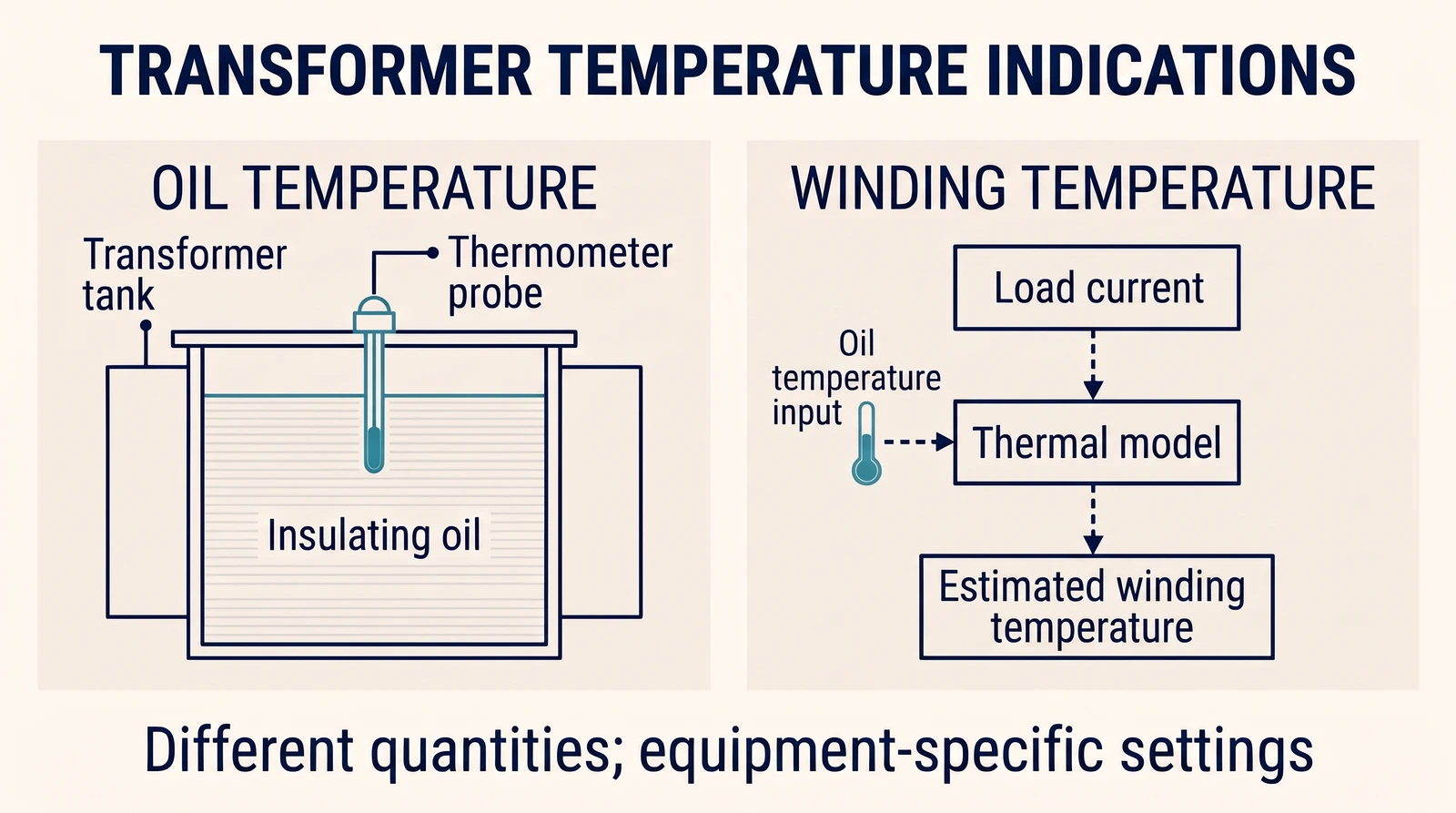
Two temperature indications
Oil temperature and winding temperature indications provide different information about a transformer. Depending on equipment design, winding temperature may be represented by an indicator or a calculated thermal model rather than a direct winding sensor.
How the indications are used
The training text describes transformer temperature indications in connection with cooling equipment, alarms and protective functions. The available functions depend on the transformer and associated controls.
Settings are equipment-specific
Alarm, cooling and trip settings are not universal. Manufacturer documentation, the protection design and the operating conditions determine which values and functions apply; a general article cannot specify settings for an installation.
Why two indications are useful
Oil is the cooling medium in the oil-filled transformer discussed in the training source; winding heating is associated with a different part of the equipment. The two indications therefore answer related but different questions. They should not be assumed equal or directly proportional to load.
Cooling and protection
Temperature information may be used to start cooling equipment or provide alarm and protective signals. The functions present, sensor arrangement and interfaces depend on the specific design. A temperature indicator, protective relay and cooling controller may not be a single device.
Interpreting readings
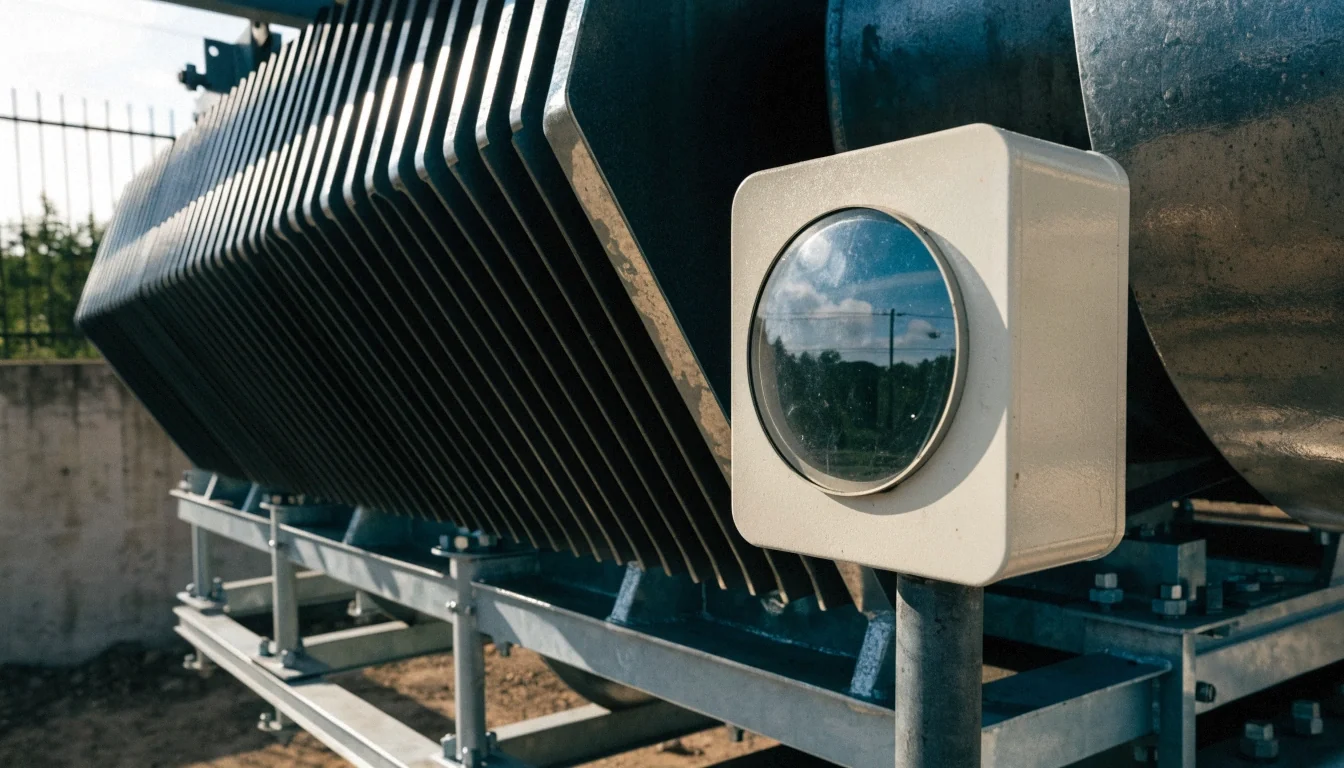
Compare indications with the relevant device documentation, operating conditions and established records. A high reading can have more than one explanation; a general chart or a photograph of another gauge does not establish the cause or prescribe a setting.
Indicators and control logic
A gauge display is not necessarily the same thing as an independently verified winding measurement. Some installations use a thermal representation of winding temperature, while the implementation is equipment dependent. Control contacts and protective logic must be understood from the actual drawings and manufacturer documentation.