
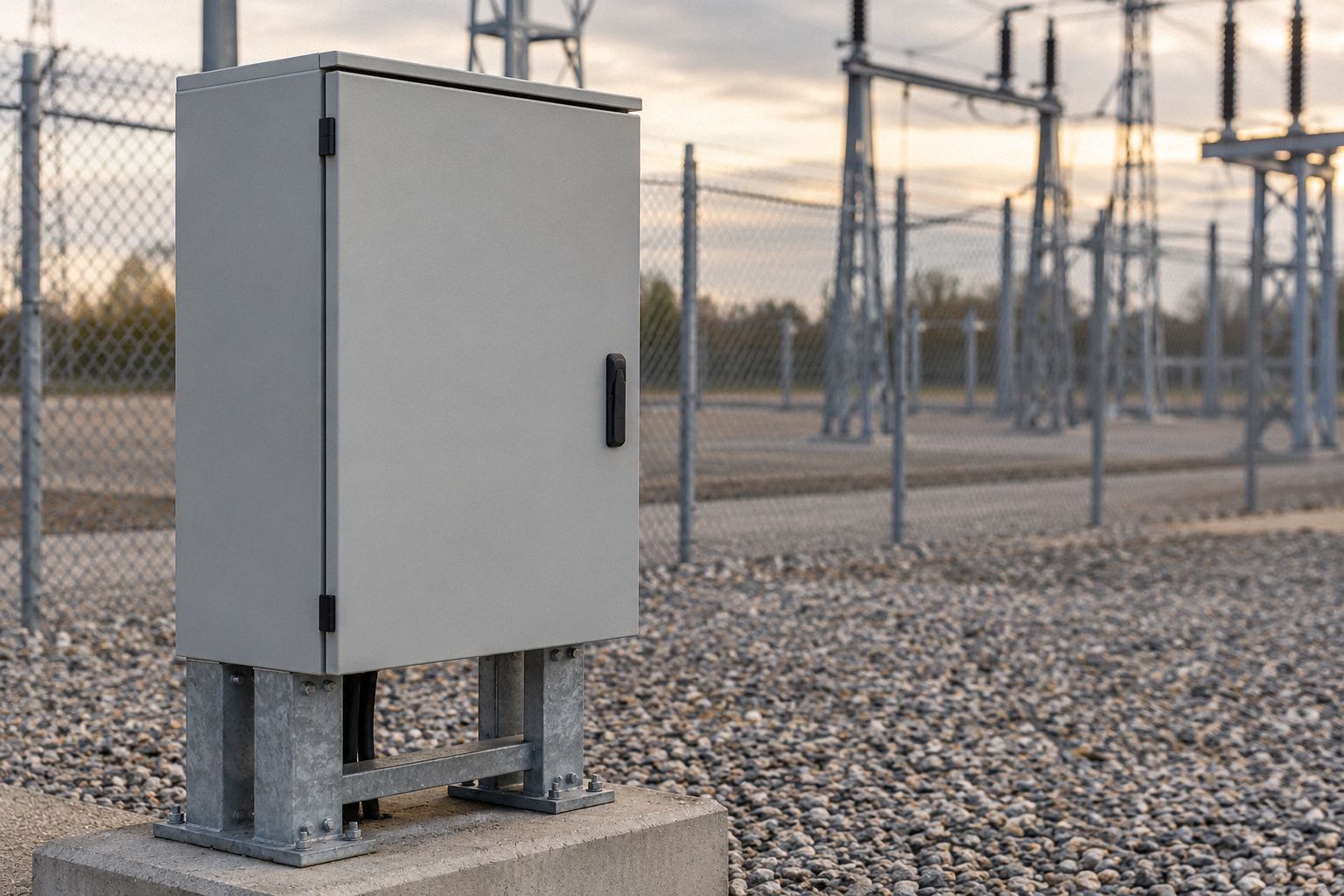
A local control cubicle (LCC) can provide a point for control and monitoring associated with substation equipment. The equipment it serves and the functions provided depend on its design.
An example associated with GIS
In Hitachi Energy's described Integrated GIS Applications arrangement, an LCC is used to control and monitor one gas-insulated switchgear (GIS) bay. The described cubicle may be integrated with the equipment or located separately. This is a manufacturer-specific example, not a description of every LCC.
How does it relate to other control panels?
The NIMI power-distribution training text describes control and relay panels used to monitor and control electrical equipment and support protection and measurement. It lists items such as meters, indicating lamps, control switches and annunciators among equipment selected according to design requirements.
Those panels are related examples of control equipment. Their contents cannot be assumed for an unidentified LCC. The division of functions between a local cubicle and other station equipment must be established from the documentation for the actual installation.
Do control arrangements differ?
Yes. A cubicle's location, connections and available functions depend on the equipment and station design. The existence of a local control point does not establish which remote functions, interlocks or indications are present. Those details require the manufacturer's documentation and the station's approved procedures.
Safety and scope
A cubicle may be associated with hazardous electrical equipment. Inspection, operation and maintenance require qualified personnel following approved procedures and the equipment documentation. This overview provides no switching, wiring, testing or repair instructions.
Sources: Hitachi Energy, Integrated GIS Applications, PDF page 12; NIMI, Electrician (Power Distribution), 2nd Year Trade Theory, PDF pages 19 and 329.