
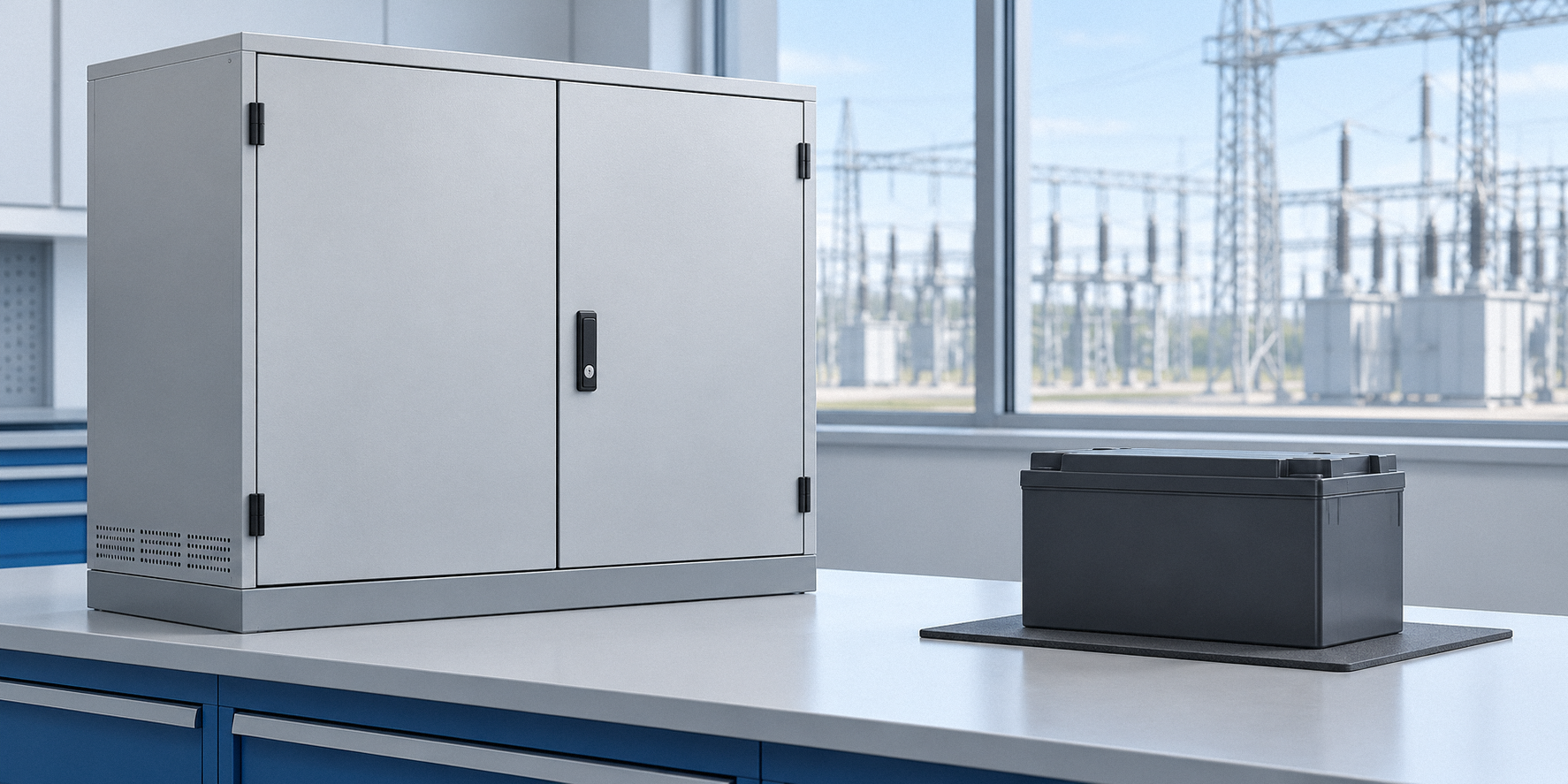
A grid substation uses auxiliary systems alongside its high-voltage equipment. One such system brings together batteries, charging equipment and direct-current (DC) distribution. Its arrangement depends on the particular station and the equipment it serves.
What is the battery system for?
A battery stores energy that can support a substation's auxiliary power needs. The NIMI substation training material identifies a battery room and DC distribution system as part of a substation, and describes batteries in the battery room as a source of uninterrupted power. The particular equipment supported and the available backup duration must be established from the station's own design.
What equipment makes up the system?
The NIMI material lists a DC battery system, charging equipment and DC distribution. These are distinct functions: the battery stores energy, charging equipment charges the battery, and distribution equipment provides paths to connected circuits. The training material does not establish one universal arrangement or a complete wiring diagram for every substation.
What does a DC distribution board do?
A DC distribution board forms part of the station's distribution equipment. As an example, a specification issued by Odisha Power Transmission Corporation for a particular grid substation calls for incoming and outgoing circuits, switching devices, monitoring and alarms. That document describes a specific procurement; it should not be taken as the configuration of another station.
Why are monitoring and alarms relevant?
Operators need information about auxiliary supply conditions. The cited distribution-board specification includes voltage and current monitoring and alarms for conditions including abnormal voltage and earth faults. Which indications are provided, and how they are handled, depend on the installed equipment and operating procedures.
What are the safety boundaries?
Battery systems can present electrical shock and burn hazards, including hazards from short circuits. Depending on battery chemistry, electrolyte and fumes can also be hazardous. Do not open, test, alter or service a battery system based on this overview. Qualified personnel should follow the station's safety procedures and the instructions for its actual equipment.
Sources and scope
This overview draws on the NIMI Electrician (Power Distribution) second-year theory, printed pages 48, 59 and 321, and the OPTCL distribution-board specification, PDF pages 9–10. The sources support a general overview and one equipment example; they do not document the design of every substation.