
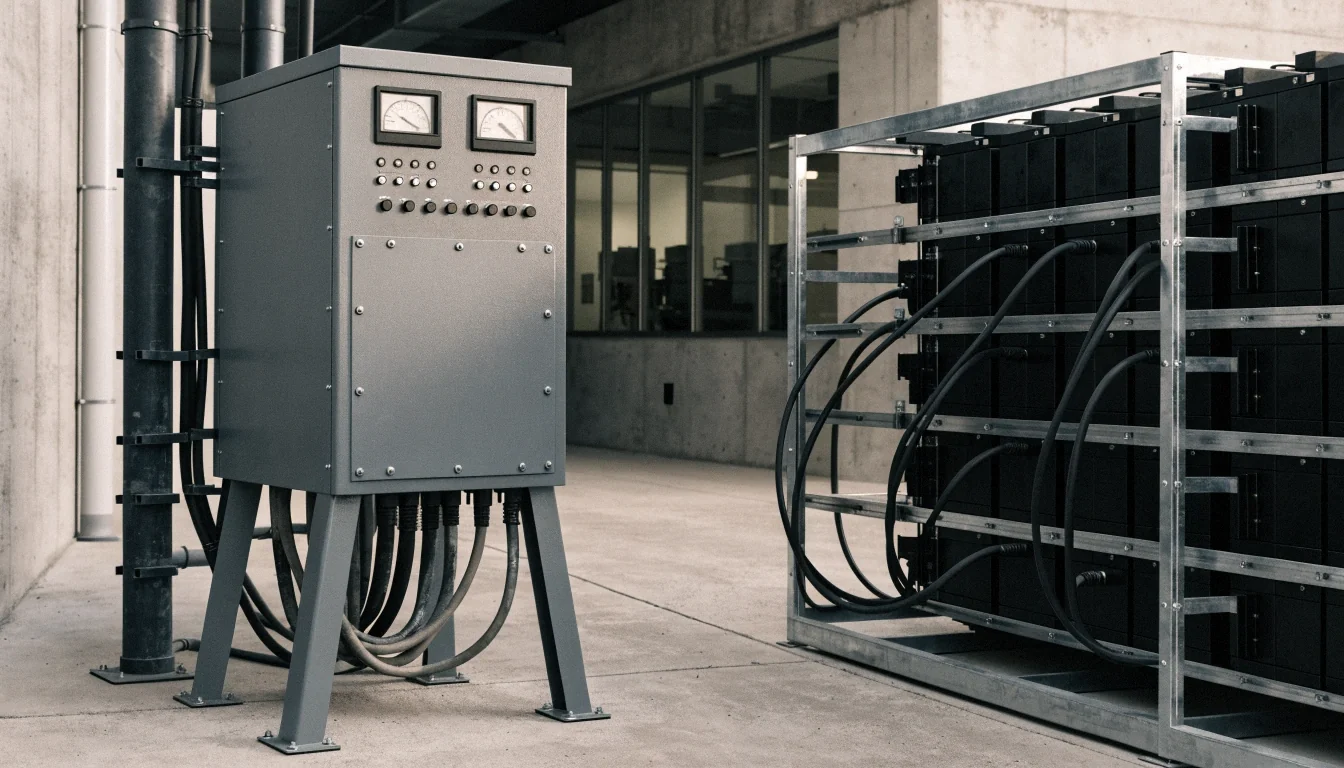
- DC voltage is most stable and reliable in nature for which the control and protection circuits in substations and power stations are designed to work on DC supply.
- The DC voltage is obtained either from Battery Set or from the charger by the use of a rectifier unit (Conversion of AC supply to corresponding DC supply).
- Maximum time DC voltage is obtained from Rectifier Unit Charger. But during emergency conditions like a failure of AC supply, maintenance/modification of charger unit, etc. to obtain the DC voltage, Battery Set is required. Moreover, it is also required for emergency lighting in the system, when there is a total failure of the AC supply.
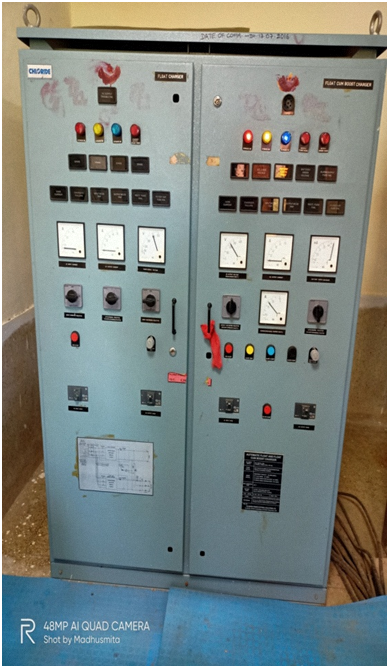
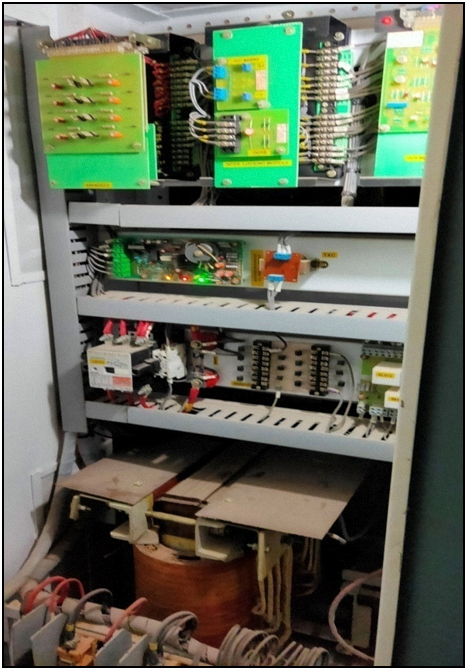
- A float-cum-boost charger can supply the DC system and charge the station battery.
- A battery Charger, when used in the stand-by application is not a standalone dedicated Battery Charger. Here battery charger along with a floating battery provides an uninterrupted DC power supply to a critical load.
- This is Float-cum-boost battery charger or FCBC feeds the critical load without any break and also charges the discharged battery.
- Float-cum-boost describes charging functions; the number of converters and their connections depend on the equipment design.
- Charger specification: input, output and control characteristics must match the charger, battery and DC load.
A controlled rectifier is one possible charger design. Other equipment can use different conversion and regulation methods.
What is FCBC battery charger?
Float-cum-boost describes charging functions; the number of converters and their connections depend on the equipment design.
CHARGING PROCEDURE OF LEAD ACID BATTERY:
Some stationary chargers provide float and equalize modes. The battery manufacturer’s recommendations determine the appropriate charging method and settings for the particular battery. See the SENS IQ technical manual for one charger example.
(i)Boost Charging:
Boost or equalize charging may be used for a particular battery and charger as directed by their manufacturers. The charging method, voltage, current and duration are equipment-specific; they must not be inferred from another installation.
(ii) Trickle / Float Charging:
Float charging is used by some stationary chargers to maintain a charged battery. The correct float setting depends on the battery and operating conditions; use the battery manufacturer’s instructions.
OPERATION OF BATTERY CHARGER
The three-phase AC supply voltage is fed to a suitably rated step down double wound transformer through suitably rated MCB, the secondary voltage of which is fed to a 3-Phase full wave full control thyristors bridge through line surge suppressor and semiconductor protection fuses. Thyristors of the bridge circuit are adequately protected by a snubber network as protection against voltage transients. The bridge circuit consists of 6 nos. of Thyristors.
The triggering of the thyristors is controlled by the electronic voltage and/or current regulator unit, which senses feedback from both output voltage and current. These feedback signals are suitably processed and compared with the reference generated in the control circuit (Controlled by the electronic SCR control module). Then the error is amplified and phase compensated by the high gain operational amplifier. The output of the final amplifier is fed to the triggering circuit, which controls the output voltage and current of the charger by adjusting the firing angle of the thyristor. The incorporation of feedback ensures automatic correction of any deviation of the set voltage/current, which may arise due to line or load fluctuations.