
How supports serve a line
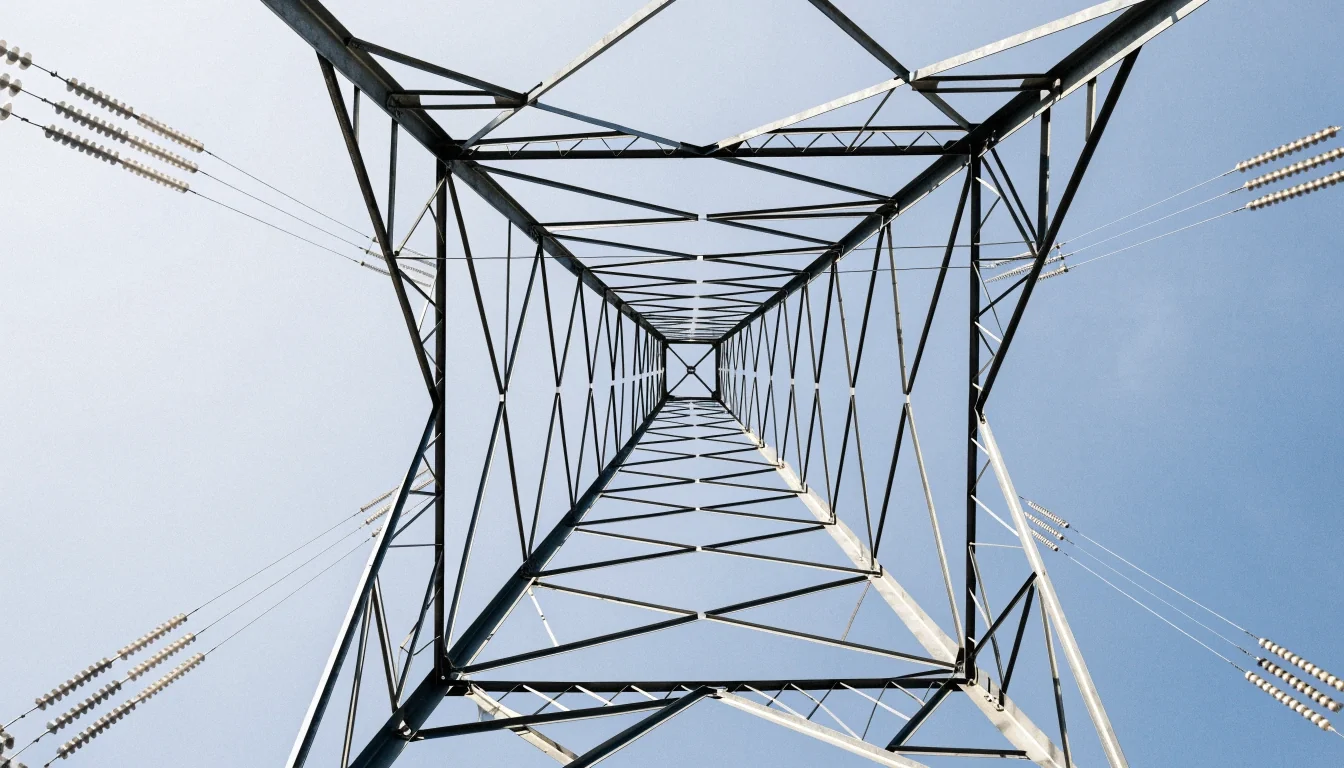
Overhead transmission supports hold conductors at designed positions along a route. Their arrangement must account for conductor forces and external loads as well as the requirements of the line. Insulators provide electrical separation between conductors and the support.
Different roles along a route
A route may use different support arrangements where its direction, terrain or mechanical loading changes. Crossarms and line fittings connect conductors and insulators to the structure. The selection belongs to the project design, not to a universal tower recipe.
Understanding a line estimate
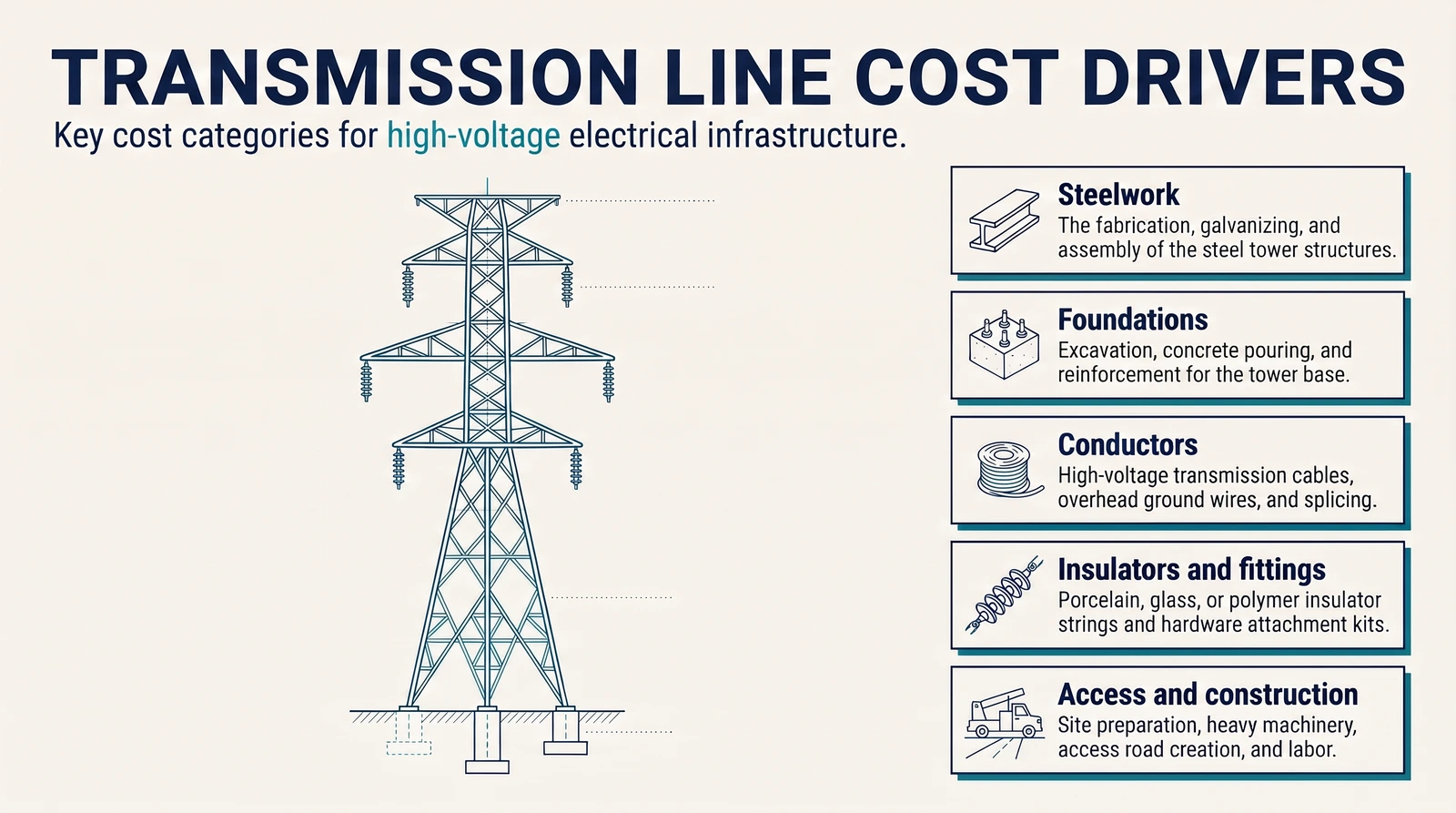
An estimate normally separates route survey and foundations from the supports, conductors, insulators, fittings and erection work. The 2014 study cited below is a historical project example: its figures are not current prices or a substitute for a site-specific estimate.
Route and loading
A support on a straight run performs a different mechanical duty from a location where a route changes direction or terminates. Span, ground profile, conductor geometry and environmental loading enter the engineering assessment. The source study distinguishes route survey and foundations from the above-ground support and fittings.
How to read an estimate
The support itself is only one cost item. The cited study also identifies conductors, insulators, line fittings, foundations and erection. Comparisons are meaningful only when the route, material quantities, work scope, currency and pricing date are consistent.
Limits of a historical study
The 2014 cost study is useful for identifying categories, not for determining today’s project cost. Design, land access, soil conditions, labor and procurement all vary. A project estimate needs a current survey and a documented scope.
Support type and route changes
Straight-route locations commonly use arrangements selected for the loads of that section, while changes of direction, termination or other constraints can require different support designs. The exact classification, geometry and foundation are specified by the line engineer; the choice is made for the particular line.
Further reading
Dronacharya institutional journal, July–December 2014, pp. 55–56.