
Substations connect parts of an electrical power system and may change voltage, switch circuits, or both. Their equipment varies with the station's purpose and design. The following overview describes common functions, rather than a complete equipment list for every installation.
Transformers and busbars
Power transformers change voltage between parts of the network. A substation can also have auxiliary transformers that supply its own equipment. A busbar is a common conductor that connects circuits operating at the same nominal voltage. The way circuits are arranged around the bus affects maintenance and fault response.
Circuit breakers and disconnectors
Circuit breakers switch circuits and can interrupt fault current within their specified ratings. NIMI also lists isolators among substation equipment.
Instrument transformers and protection
Current transformers and voltage transformers provide scaled signals for measuring instruments and protective equipment. Protective relays use measured quantities to detect conditions for which they are set and can send a trip signal to a circuit breaker. The protection scheme and its response depend on the installation.
Surge arresters and insulation
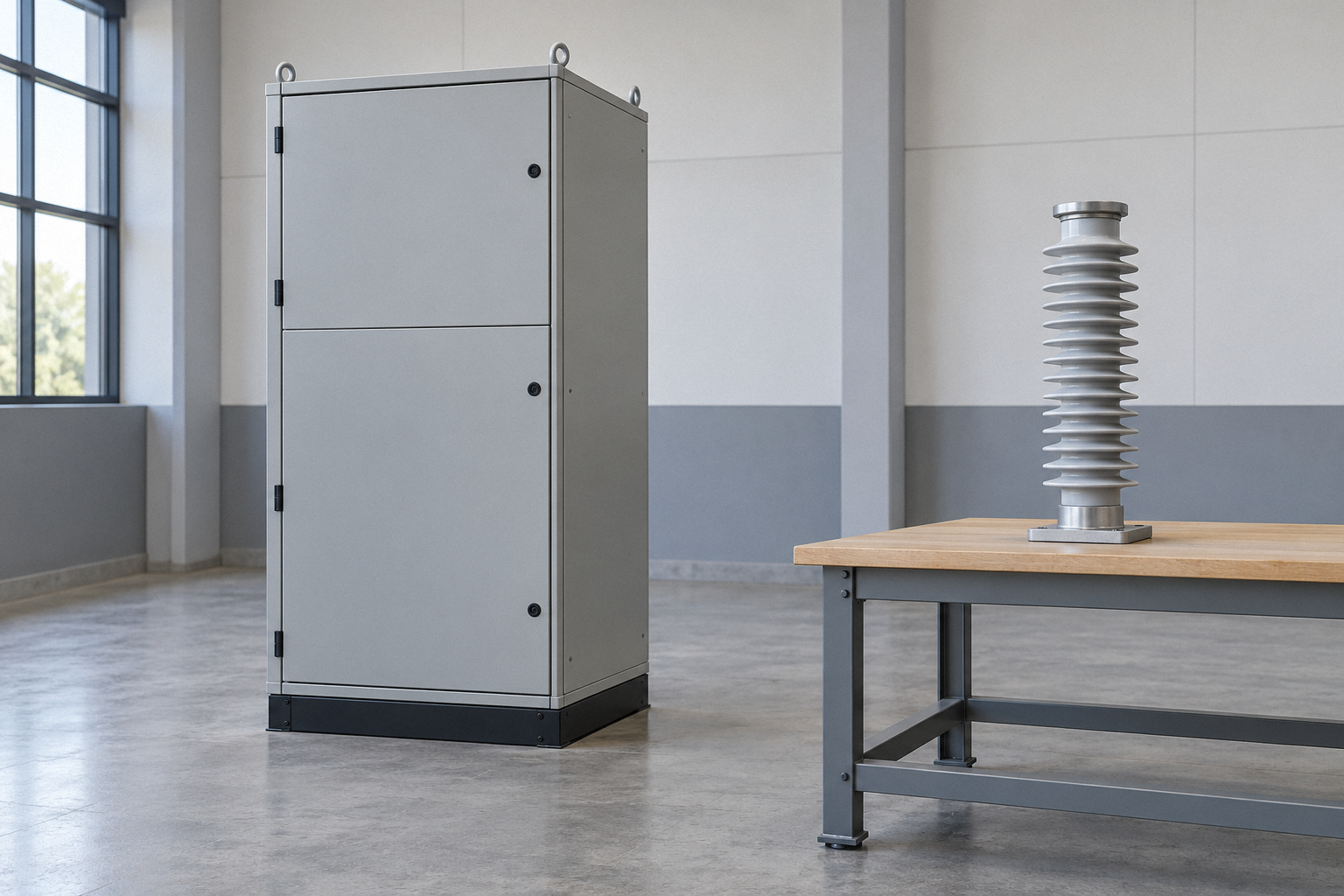
Surge arresters help limit transient overvoltages affecting connected equipment. NIMI also lists insulators among substation equipment. Their selection and placement depend on the station's design and operating conditions.
Controls, station supply and earthing
Control and protection panels connect equipment status, measurements and commands with the station's switching devices. NIMI lists a battery system, charging equipment, DC distribution and a station earthing system among substation components. Their configuration and duties depend on the installation.
Substation equipment can remain hazardous even when a switch appears open. This overview is not a switching, testing or maintenance procedure. Such work requires qualified personnel, the applicable procedures and the equipment manufacturer's documentation.