
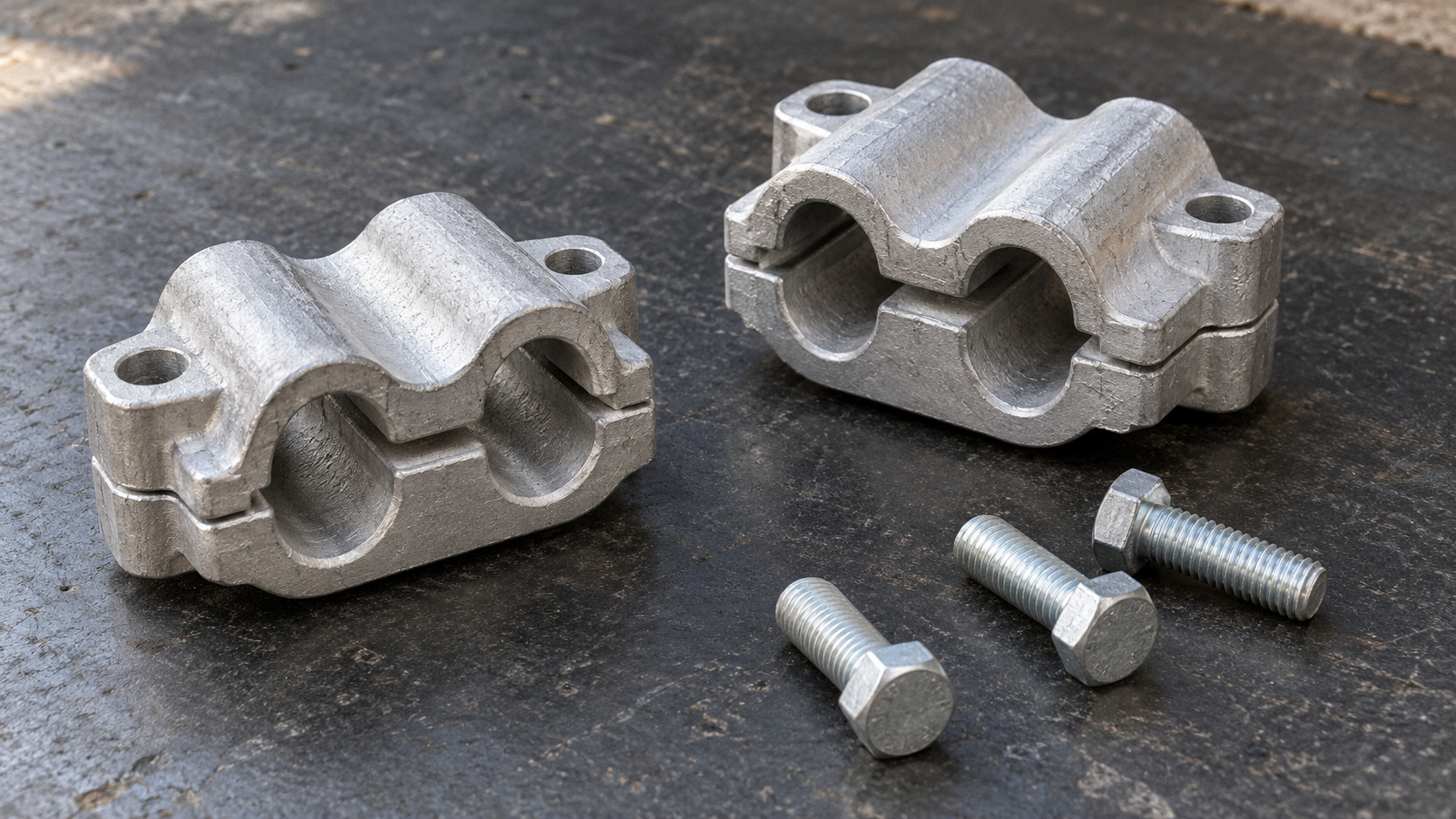
Mechanical and electrical roles
Clamps and connectors are fittings used to attach or join conductors and related equipment. A connection may need to perform both an electrical and a mechanical role, depending on its location.
Overhead line fittings
The cited line-cost study lists clamps, spacers and fittings among the components used for conductor arrangements and insulator attachments. Their selection depends on the specific conductor and support arrangement.
Choosing a component
A drawing and manufacturer documentation establish the intended conductor size, material compatibility, load and installation method. A general photograph cannot establish the construction of a particular jumper or connection.
Distinguishing function
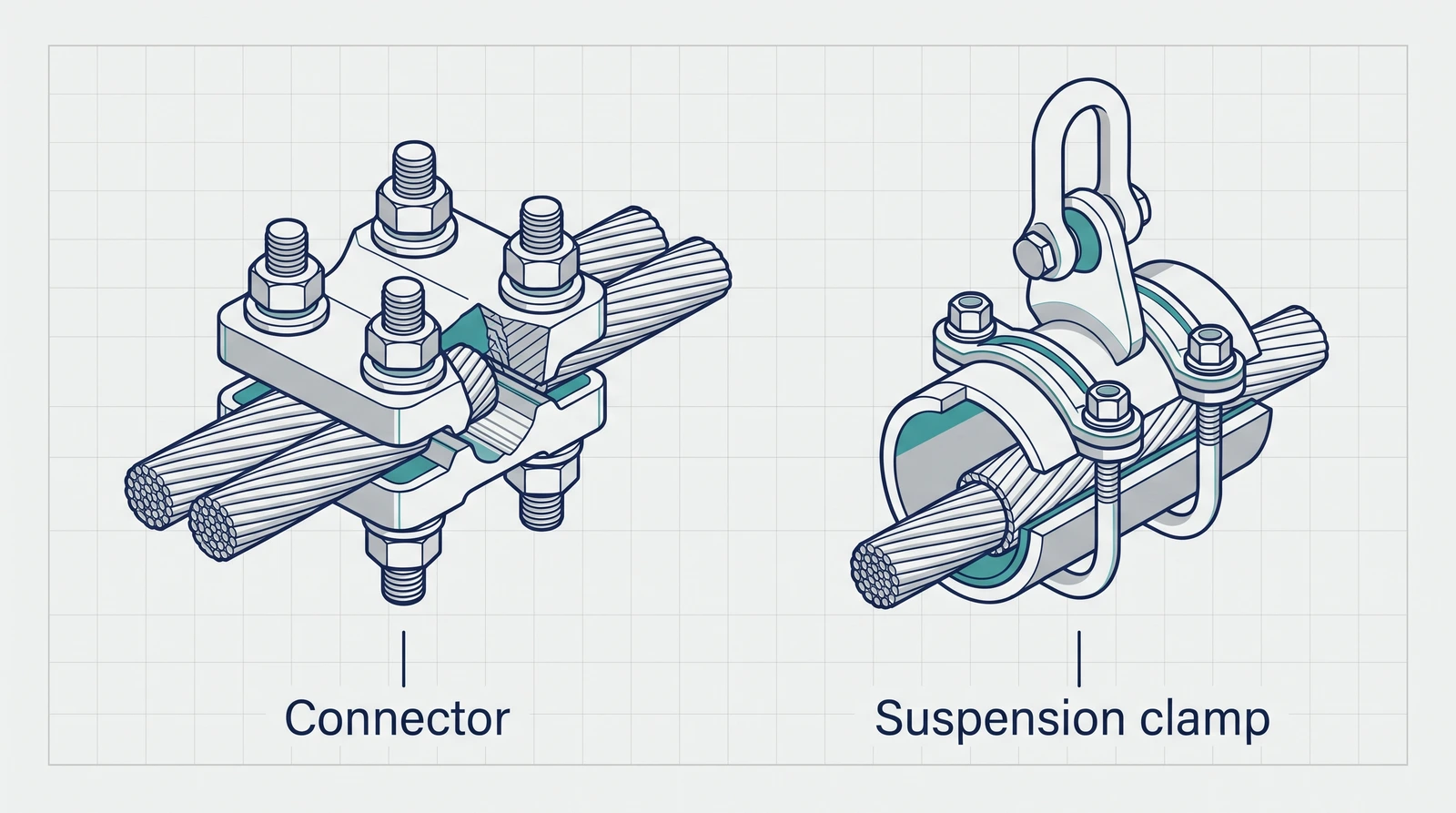
A suspension fitting carries a conductor or insulator assembly; a connector makes an electrical junction; a spacer maintains the geometry of a conductor arrangement. Some assemblies combine functions. The name alone does not establish that a fitting can be substituted for another.
Design context
Conductor material and dimensions, mechanical forces, environmental exposure and the intended electrical duty matter when selecting a fitting. The 2014 line study groups clamps, connectors, spacers and related fittings as separate line components.
Reading a project drawing
A project drawing and the manufacturer’s instructions identify the intended attachment and compatible components. A generic picture does not establish a Y-jumper’s route, terminal assignment or installation details.
Material and mechanical compatibility
A conductor connection must match the parts it joins. The applicable mechanical load, conductor material and service environment affect the selection. A fitting intended primarily to support a conductor should not be assumed to provide the same electrical connection as a connector; the actual product may combine roles.
Further reading
Dronacharya institutional journal, July–December 2014, p. 56.